
Presidential Renovations: A Visual Timeline of the White House
May 26, 2026 · 7 min read
The White House has been continuously renovated, expanded, and reimagined for over 230 years. Every president who has lived there has faced the same fundamental challenges homeowners face today: aging infrastructure, outgrown layouts, structural surprises, and the tension between preserving character and meeting modern needs.
What follows is a visual timeline of the major renovations — drawn from the White House's own records and the National Archives — and what each project can teach us about our own homes.
Major Renovations & Expansions
Cornerstone Laid — James Hoban's Design Chosen
George Washington selected the site in 1791. The following year, the cornerstone was laid and Irish-born architect James Hoban's design was chosen from an open competition. Construction would take eight years, and Washington himself never lived there.
The LessonGetting the design right before you break ground saves far more time and money than corrections mid-build. Don't rush the planning phase.
John Adams Moves Into an Unfinished Home
President John Adams and his wife Abigail moved into the still-unfinished residence in November 1800. Abigail famously hung laundry in the East Room because the house lacked proper utility spaces. Only 6 of 32 rooms were ready for use.
The LessonA house that isn't quite finished is still a home. Prioritize the spaces you use most and phase improvements over time — you don't have to do everything at once.
British Forces Burn the White House
During the War of 1812, British troops set fire to the President's House. James Hoban was appointed to oversee the reconstruction. Remarkably, some of the charred sandstone exterior walls were salvaged and incorporated into the rebuilt structure — painted white to conceal the fire damage, a practice that is widely credited with giving the White House its name.
James Monroe moved back in in 1817, and the South Portico was added during his administration.
The LessonEven catastrophic damage doesn't always mean starting from scratch. Assess the bones of what remains before deciding to demolish — the foundation and structure are often the most valuable parts of an older home.
Andrew Jackson Adds the North Portico
The iconic North Portico — the columned entrance facing Pennsylvania Avenue — was completed under Andrew Jackson in 1829, giving the White House the symmetrical facade the world recognizes today. It had been part of Hoban's original design but took 37 years to actually build.
The LessonCurb appeal pays dividends. The exterior of a home shapes every first impression — and the right architectural detail can define a property for generations.
Theodore Roosevelt: The West Wing & Major Renovation
When Roosevelt moved in with his wife Edith and six children, the residence was badly overcrowded. He commissioned the famous New York firm McKim, Mead and White to redesign the entire building. The renovation separated the presidential offices from the family residence by constructing a new temporary Executive Office Building — what we now know as the West Wing — connected by a colonnade. It also demolished the aging Victorian greenhouses that had grown around the building.
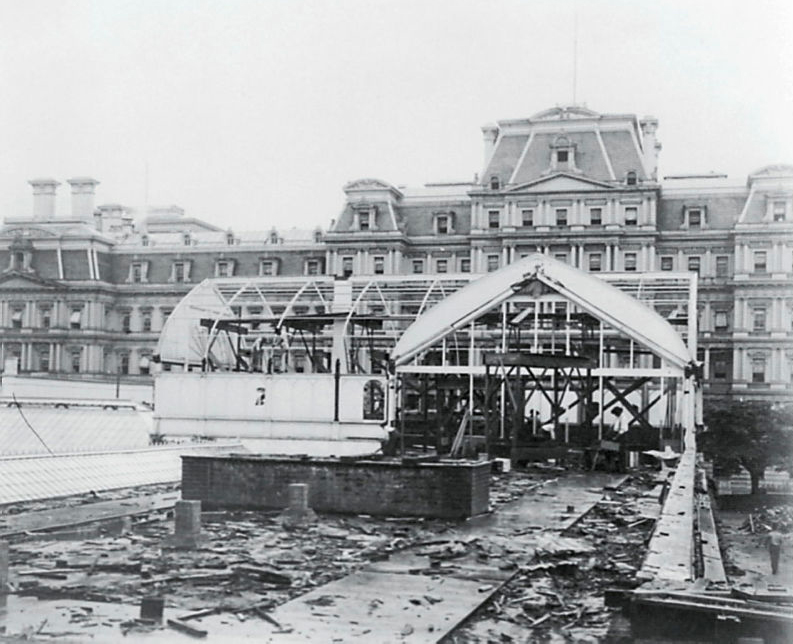
New West Wing with old conservatory visible behind, 1902. White House Historical Association.
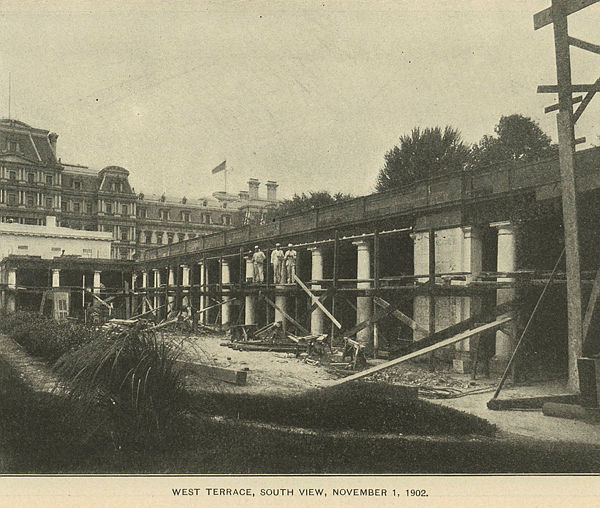
Construction of the West Terrace, 1902. White House Historical Association.
The LessonWhen your home isn't working for your lifestyle, creative space planning makes all the difference. Sometimes separating functions — work from living, guests from family — is worth more than adding square footage.
William Howard Taft Builds the Oval Office
Roosevelt's successor expanded the West Wing and constructed the first Oval Office within it — now one of the most recognizable rooms in the world. The oval shape, borrowed from 18th-century reception rooms, was designed to allow the president to greet guests who entered from either side without favouring one group over another.
The LessonThoughtful room design serves a purpose beyond aesthetics. The best spaces are planned around how people will actually use them.
Calvin Coolidge: The Roof Crisis & Third Floor Addition
President Coolidge received an alarming structural report: the White House roof was near collapse under the weight of an overstuffed attic. Rather than simply fixing the roof, Coolidge secured $375,000 from Congress to add an entire third floor — gaining offices, living quarters, and a solarium with panoramic views of the city.

President Coolidge overseeing the 1927 renovations. Library of Congress.
The LessonWhen addressing a necessary repair, think bigger. A new roof is an opportunity for skylights. A failing HVAC system is a chance to improve your home's efficiency. Address the problem and improve the property at the same time.
FDR Expands the West Wing & Relocates the Oval Office
Franklin D. Roosevelt overhauled the West Wing substantially — adding a second floor, a larger basement, and relocating the Oval Office to its current position overlooking the Rose Garden. He also added a swimming pool for rehabilitation. In 1942, he constructed the East Wing to conceal an underground bunker built to protect the president during World War II.
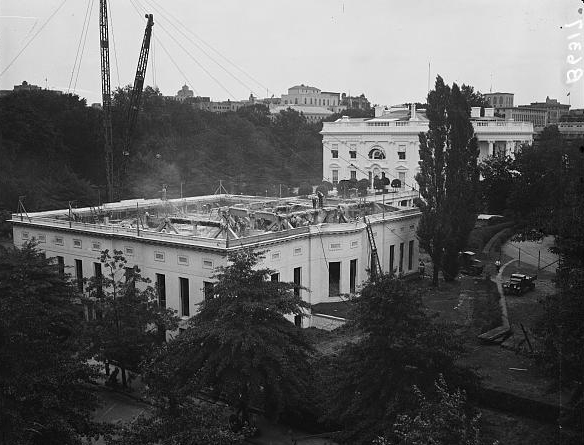
West Wing expansion under construction, 1934. Library of Congress.
The LessonMajor renovations often reveal opportunities that weren't originally planned for. Stay flexible — some of the best decisions happen when you're already in the walls.
Truman: Total Interior Reconstruction
Less than 50 years after the Roosevelt renovation, the White House was structurally failing. A leg of Margaret Truman's piano broke through the floor. Engineers discovered the entire interior was dangerously unsound — the building was essentially a shell held up by plaster and habit. President Truman approved a total reconstruction: everything but the exterior sandstone walls was dismantled, the foundation was excavated two additional stories, and the building was rebuilt from within. The Truman family moved back in 1952.
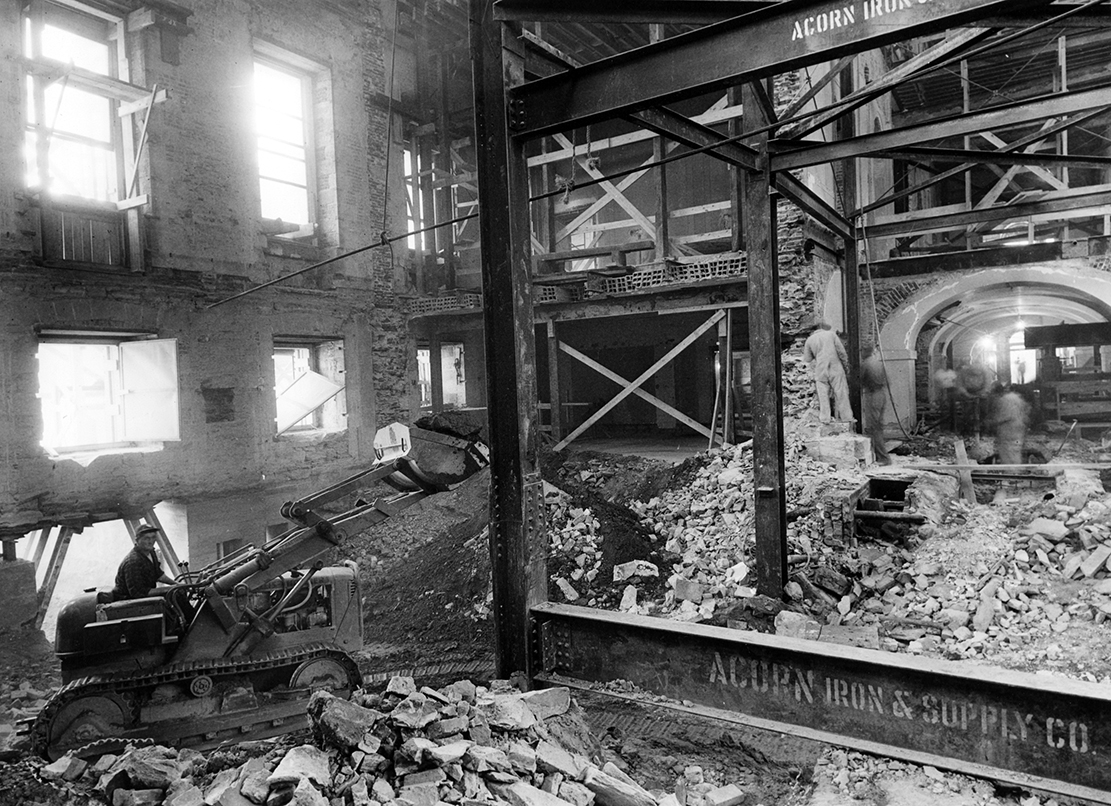
Interior stripped to the exterior walls, 1950. National Archives.
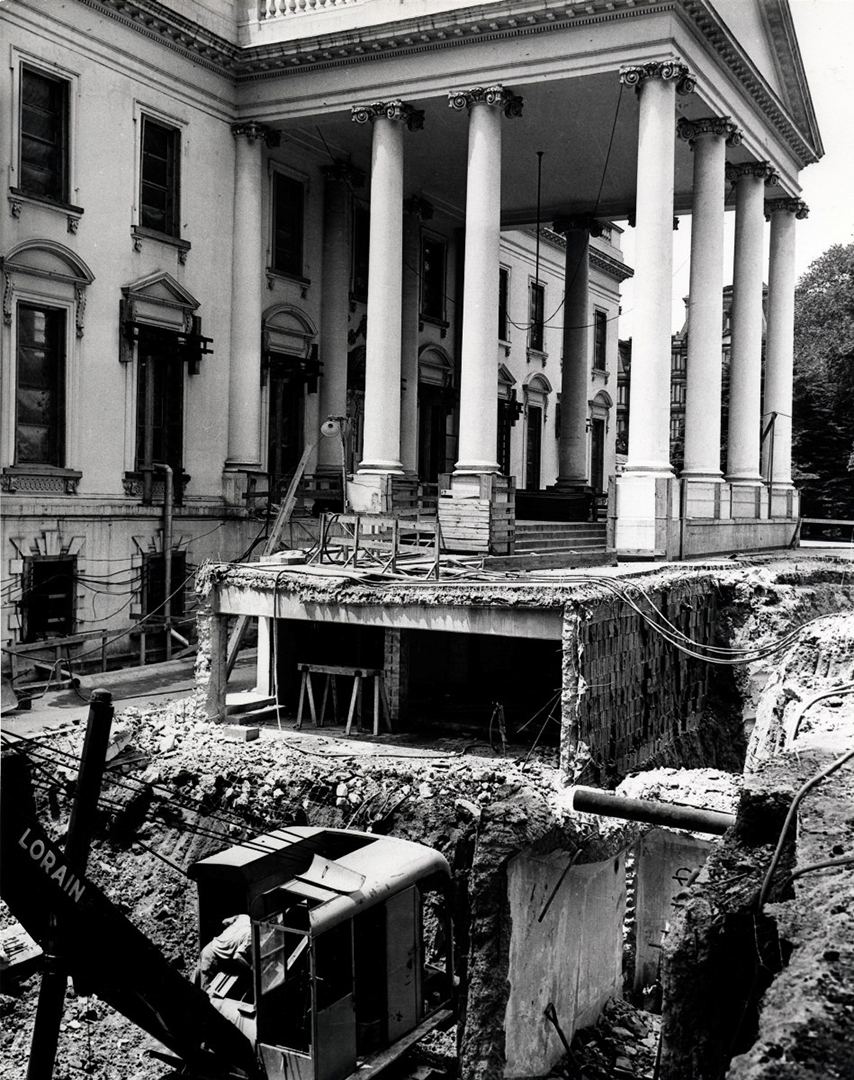
North Portico excavation, 1950. National Archives.
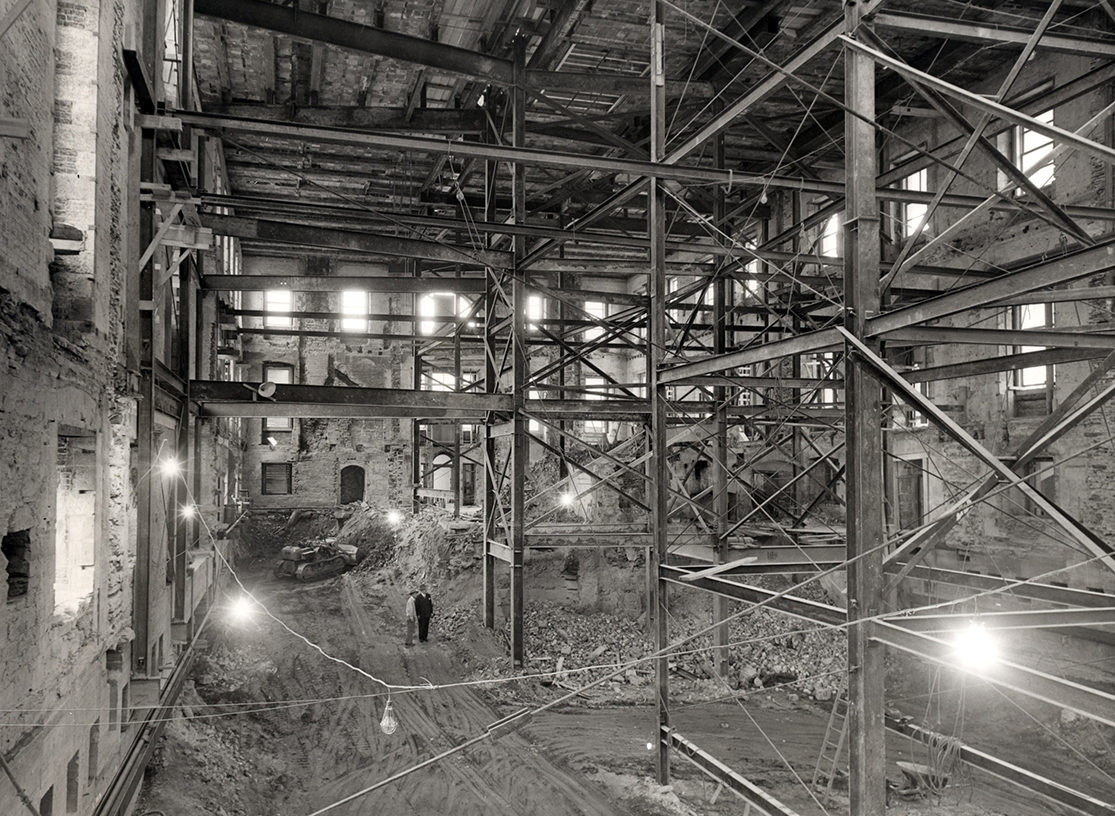
Steel frame rising inside the preserved exterior walls, 1950. National Archives.
The LessonDon't ignore structural issues. What starts as a creaky floor can become a safety hazard. The Truman renovation cost far more than early intervention would have — a lesson that applies to any home with deferred maintenance.
Nixon: The Pool Becomes the Press Briefing Room
President Nixon converted FDR's indoor swimming pool into the White House Press Briefing Room in 1970 — one of the more creative repurposing decisions in the building's history. The pool still exists beneath the briefing room floor. In 1975, President Ford responded by installing a new outdoor pool on the South Grounds, funded entirely by private donors.
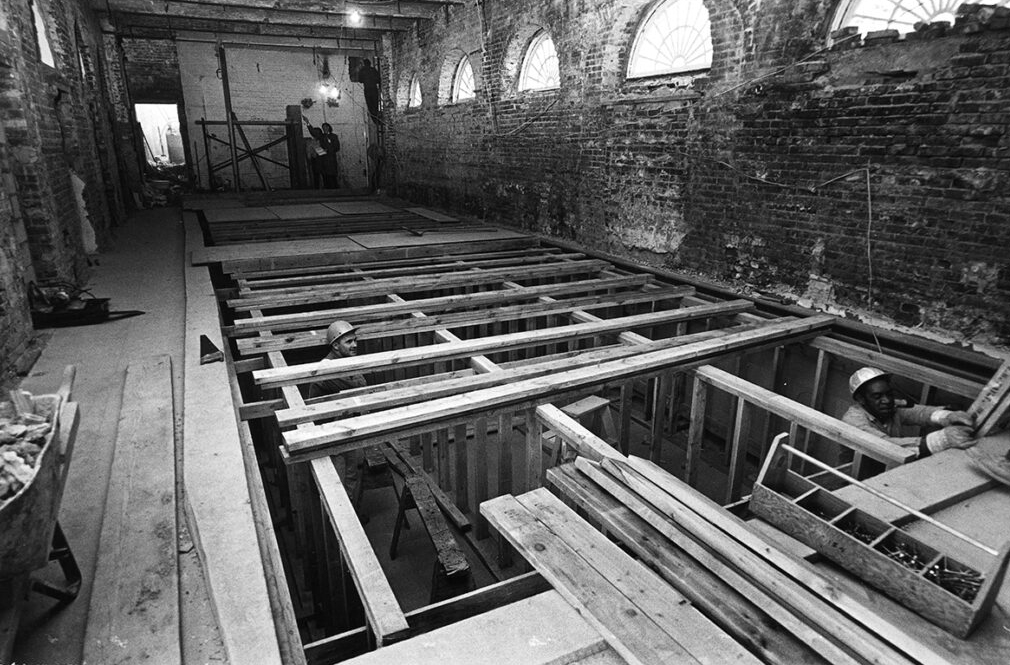
Converting the indoor pool to the press briefing room, 1970. White House Historical Association.
The LessonSpaces can be reimagined. A room that no longer serves its original purpose isn't wasted space — it's an opportunity. The best renovations find new uses for what already exists.
The East Wing Expansion & State Ballroom
In 2025, construction began on the most significant expansion in decades: a new State Ballroom replacing the 1902 East Wing, adding approximately 90,000 square feet of event space with a seated capacity of 650 — more than tripling the East Room's capacity. The project, led by McCrery Architects with Clark Construction, was privately funded at an estimated cost of $250 million.
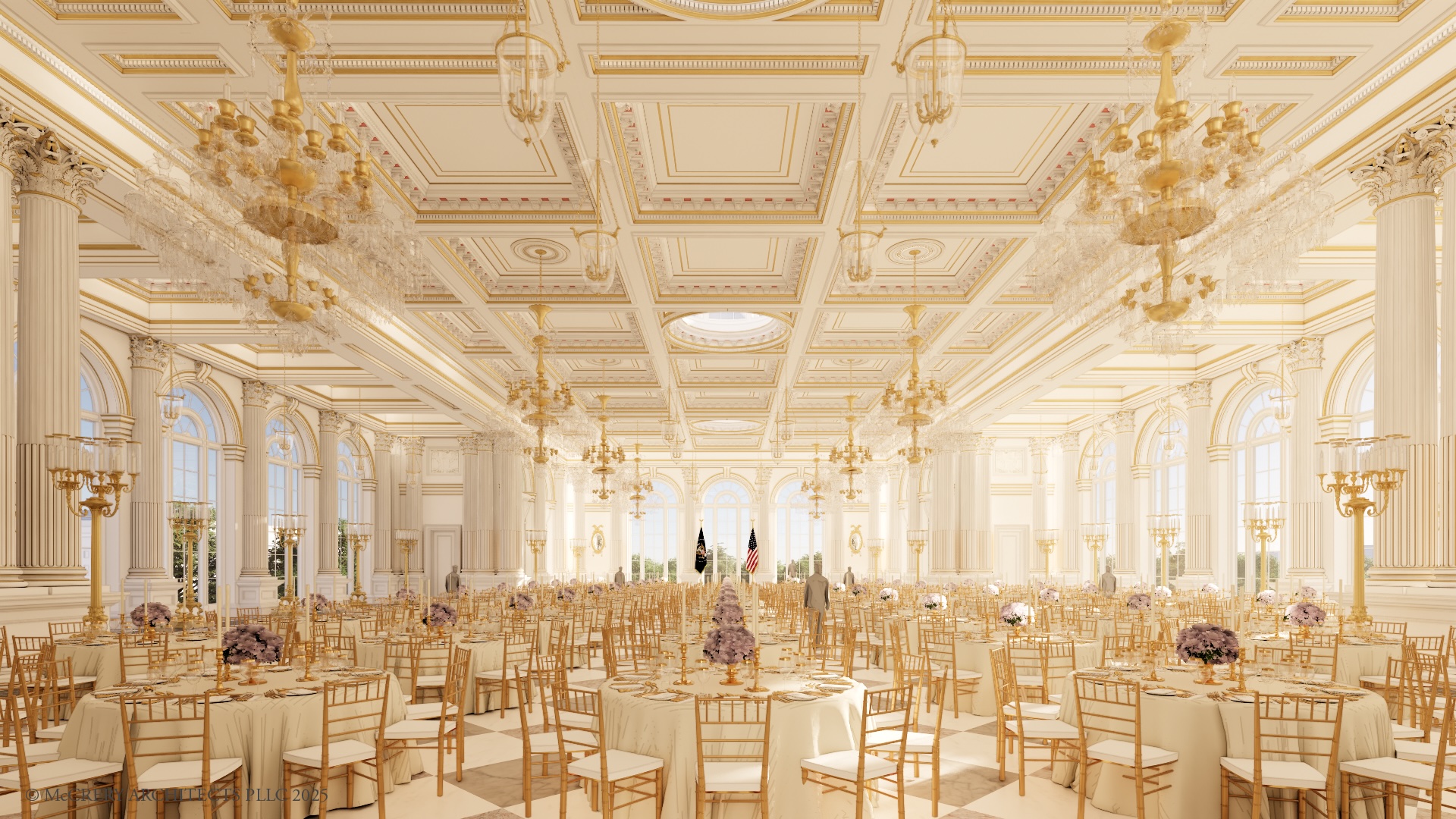
Interior rendering of the new White House State Ballroom. White House / McCrery Architects.
The LessonEvery era has its renovation. The needs of a home — and a nation — change over time. Building for the future while respecting the past is the mark of every successful major project.
What 230 Years of Presidential Renovations Teaches Us
- Don't ignore structural problems. The Truman reconstruction is the starkest example in American architectural history. What looked like a functional building was a structural catastrophe waiting to happen. Address issues when they're small.
- Repair and improve at the same time. Coolidge didn't just fix the roof — he added a third floor. When you're already opening the walls, think about what else you can improve.
- Separate functions when space is tight. Roosevelt's West Wing solved a space problem not by adding to the residence, but by moving work out of it entirely. Sometimes the best renovation is a layout change, not more square footage.
- The bones are often worth saving. From the fire-damaged walls of 1814 to the Truman reconstruction, the exterior shell of the White House has survived while everything inside was replaced. In older homes, the structure and character are frequently the most valuable assets.
- Repurpose before you demolish. Nixon's press briefing room was a swimming pool. Every home has spaces that could serve a different — and better — purpose.
- Plan for how you'll actually live there. Every presidential renovation was driven by real needs: a growing family, structural failure, changing uses. The best renovations solve actual problems rather than chasing trends.
At Mad River Homes, we do the renovation work before a home ever lists. That means every kitchen update, bathroom refresh, and mechanical inspection has already happened — so you can focus on the home you're buying, not the project you're inheriting.
Images courtesy of the White House, White House Historical Association, Library of Congress, and National Archives — all works of the United States Government and in the public domain. Sources: whitehouse.gov, White House Ballroom Legacy, Library of Congress.